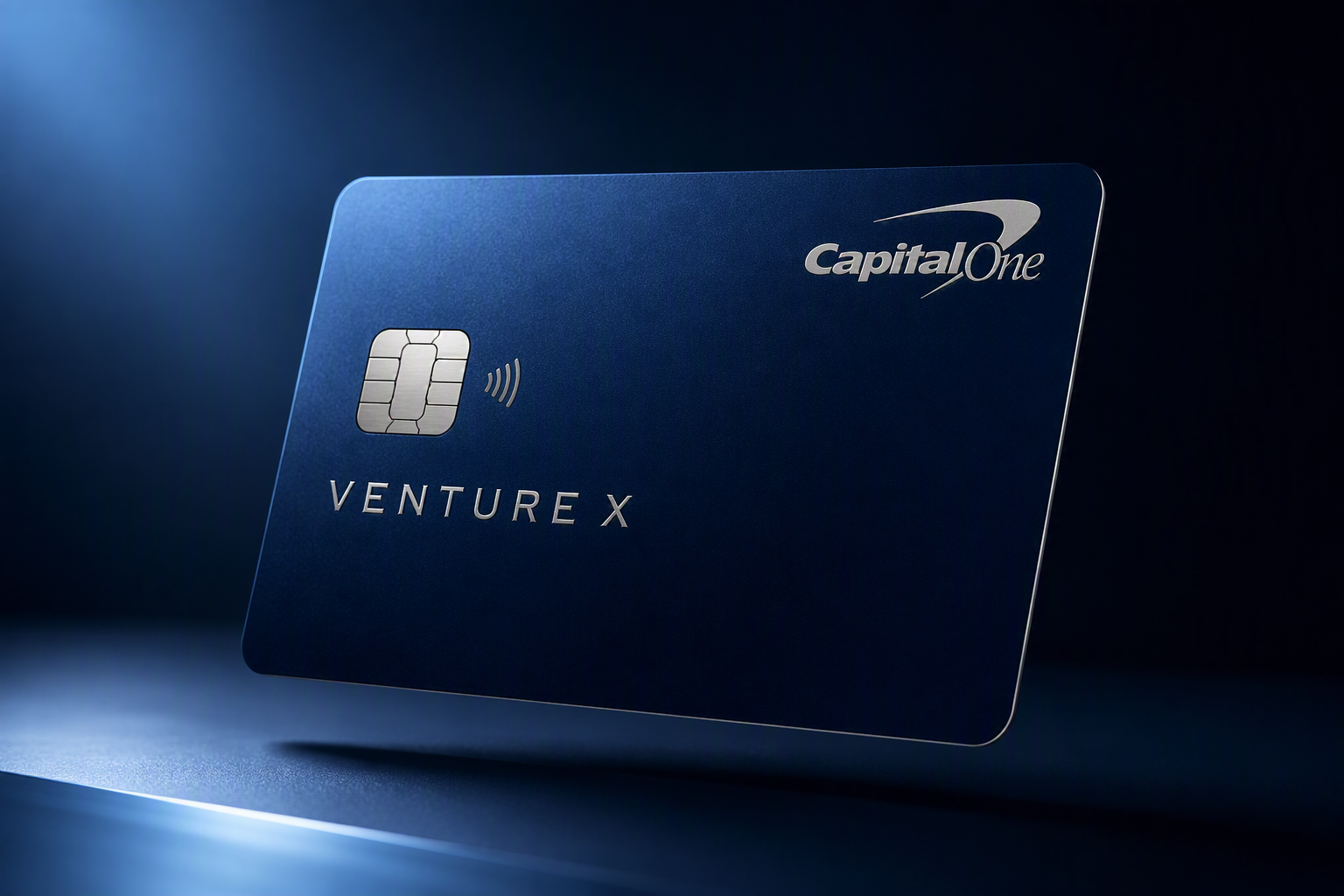
Ask someone who holds a Chase Sapphire Reserve, an Amex Platinum, a Citi Strata Premier, and a Capital One Venture X which airline program their points can all transfer into, and most will struggle to name one. The answer is Flying Blue — the loyalty program for Air France and KLM — and it's the only airline program that all five of the major US flexible currency ecosystems can reach at a 1:1 ratio.
That's not a minor footnote. That's a structural advantage most programs can't claim. Add a monthly flash sale that consistently prices transatlantic business class below what competitors charge for economy, a free stopover policy that turns one award booking into two destinations, and a SkyTeam network that spans more than 1,000 destinations worldwide, and the picture of Flying Blue starts looking very different from the "it's just for Air France loyalists" reputation it carries in the US.
This guide covers how the program works, why it belongs in a well-built points strategy, and the one meaningful caveat that honest coverage of Flying Blue cannot skip.
What Is Flying Blue
Flying Blue is the joint loyalty program of Air France, KLM, and Transavia. As a SkyTeam alliance member, it also covers partner redemptions on Delta, Korean Air, Aeromexico, China Southern, and several others — meaning a Flying Blue balance can reach considerably further than just Air France and KLM metal.
Program: Air France, KLM, and Transavia; SkyTeam alliance
Miles value: ~1.2–1.6¢ per mile depending on redemption
Elite tiers: Explorer (base), Silver, Gold, Platinum, Ultimate
Pricing model: Fully dynamic — no published award chart
US transfer partners: Chase Ultimate Rewards, Amex Membership Rewards, Citi ThankYou, Capital One Miles, Bilt Rewards — all at 1:1
Miles expiry: 24 months of inactivity; any activity resets the clock
Promo Rewards: Monthly 25%+ discounts on select awards, published around the 1st of each month
Official programme overview: flyingblue.fr/en/programme
The program uses dynamic pricing — no published award chart tells you in advance what any flight will cost in miles. Prices shift with demand and availability. This creates unpredictability at the high end but also creates opportunity: Flying Blue consistently releases premium cabin award space more generously than many programs, and the Promo Rewards mechanism creates a monthly floor that is reliable even when regular pricing isn't.
One network development worth noting: Air France-KLM is set to become the majority owner of SAS in the second half of 2026. A full integration of EuroBonus into Flying Blue is widely expected to follow, which would extend the program's Scandinavian coverage meaningfully and add millions of new members to the ecosystem. If you hold EuroBonus miles, deploy them before any forced conversion changes the value equation.
Elite Status and Experience Points
Flying Blue uses a dual-currency system: miles for award redemptions, and Experience Points (XP) for elite status qualification. The two are earned separately and tracked separately — a distinction that catches new members off guard.
For the complete and current breakdown of what each tier includes across baggage, lounge access, upgrades, and partner benefits, Flying Blue's official tier benefits page is the authoritative reference: flyingblue.fr/en/programme/more-info/tier-benefits.
XP is earned per flight segment based on cabin class — economy earns roughly 4–8 XP per segment, business earns 16–20 XP, and first class earns 24 or more. For context, a roundtrip transatlantic flight in business class earns somewhere between 32 and 40 XP, depending on routing. Getting from Explorer to Gold at 180 XP requires meaningful flying — this is a program where elite status is earned on the plane rather than gamed through card spending alone.
Gold is the tier most Flying Blue travelers target. It unlocks SkyTeam lounge access worldwide and brings a guest — the single most valuable benefit in the program for many travelers. It's also where SkyPriority boarding and meaningful upgrade priority begin.
Important mechanics to understand: XP resets at the end of your annual qualification cycle. When you earn enough XP to advance a tier, that XP is "spent" on the tier upgrade — you don't carry it forward. So a Silver member needs to earn a full 180 XP during their Silver year (not 80 additional XP on top of the 100 they already earned). The program functions as a ladder you climb one tier at a time, with each step requiring a fresh XP accumulation.
How to Earn Flying Blue Miles
Flying Blue's mile earning on flights is revenue-based — calculated per euro spent on the ticket price (excluding taxes and fees), not by distance flown. The earning rate scales with status:
- Explorer (base): 4 miles per euro spent
- Silver: 6 miles per euro
- Gold: 7 miles per euro
- Platinum: 8 miles per euro
- Ultimate: 9 miles per euro
This revenue-based structure means a cheap discount-fare ticket to Paris earns fewer miles than a flexible fare on the same flight. Travelers who book premium economy or business at paid rates build balances considerably faster than those who exclusively book discounted economy.
Beyond flights, miles can also be earned through hotel partners, car rental partners, and the Flying Blue shopping portal. The program also runs a Subscribe to Miles option — a monthly subscription that deposits a fixed number of miles into your account automatically — though this earns miles but not XP, so it doesn't contribute to status qualification.
The Transfer Partner Advantage
This is the section that changes how most US readers think about Flying Blue. The program is a 1:1 transfer partner for every major US flexible points currency:
No other airline program in this guide series — not Delta, United, or AAdvantage — matches this transfer breadth. Delta accepts Amex but not Chase or Citi. AAdvantage accepts Citi and Bilt but not Chase or Amex. Flying Blue takes all five.
"Flying Blue is the only airline program that Chase, Amex, Citi, Capital One, and Bilt all transfer into. That's not a coincidence — it's the single best argument for keeping a balance ready."
In practice, this means any reader who holds a Sapphire Reserve, an Amex Platinum, a Citi Strata Premier, or a Venture X is already capable of funding a Flying Blue award without holding a Flying Blue-specific card or booking a single Air France flight beforehand. You build the balance through everyday spending on cards you already carry, and you deploy it when the right Promo Rewards window opens.
Transfer bonuses from partner programs appear periodically — 25–30% bonuses between Chase or Amex and Flying Blue have been seen multiple times in the past year. These are worth waiting for when a specific redemption is planned. As always: never transfer speculatively. Confirm the award is bookable at your target price before moving any miles.
Promo Rewards - The Monthly Flash Sale
This is Flying Blue's most distinctive feature, and the main reason to have miles ready to deploy at any given moment. Every month, Flying Blue publishes a list of discounted awards for select routes — typically 25% off the regular dynamic pricing. The discount is reliable; the routes rotate monthly and are published around the 1st of each month.
For July 2026, the structure looks like this:
The July 2026 booking window runs through July 31, with travel available through December 31, 2026 — giving a meaningful planning horizon. Routes on offer this month include Air France economy from Europe to Denver, Montreal, and Raleigh, and KLM economy from Europe to Chicago, Miami, Montreal, Portland, and Toronto, all at the 18,750-mile rate. New York business class is also discounted, starting at 45,000 miles one-way.
Flying Blue's award calendar — accessible on the Flying Blue website — lets you search pricing across an entire month at once rather than clicking through individual dates. When Promo Rewards are active, check the full calendar first to spot which specific dates hit the lowest mileage tiers before committing to an itinerary. A one-day shift can sometimes make the difference between Promo pricing and standard pricing even within the same promotion.
One additional benefit for families: children ages two to twelve receive 25% off all Flying Blue award tickets, including Promo Rewards pricing — a discount that stacks, not replaces, the existing Promo Rewards rate.
Where Flying Blue Wins - The Best Redemptions
Transatlantic business class. This is Flying Blue's centerpiece redemption. Air France's La Business cabin on the Airbus A350 — with full lie-flat seats and direct-aisle access in a 1-2-1 configuration — routinely prices at or below what competitors charge for their business class on the same routes. At 45,000 miles during a Promo Rewards month, a one-way Paris business class award is among the best-value redemptions available to US travelers in any program.
Free stopover in Paris or Amsterdam. When booking a round-trip award on Air France or KLM, you can add a free stopover of any length — a day, a week, as long as you want — in Paris (CDG) or Amsterdam (AMS) at no additional miles cost. This is genuinely unusual. Most programs either prohibit stopovers on award tickets or charge extra miles for them. Flying Blue lets you use a transatlantic redemption to effectively visit two European destinations for the price of one, with the stopover in one of the continent's best gateway cities.
Delta-operated flights through SkyTeam. As a SkyTeam alliance partner, Flying Blue can sometimes book Delta-operated flights at lower prices than Delta's own program charges for the same seat. This varies by route and availability but is worth checking — particularly for domestic US positioning flights ahead of international itineraries, where Delta may have better availability than Air France direct.
Partner sweet spots. SkyTeam's network is broader than most people realize. Korean Air, Aeromexico, and China Southern are all SkyTeam partners, and Flying Blue miles can access their award space. Korean Air's Prestige class (business) between the US and Seoul has historically been a solid redemption for the right traveler.
The Fuel Surcharge Problem
This is the section that separates honest Flying Blue coverage from promotional coverage. It cannot be skipped.
Flying Blue passes along carrier-imposed fuel surcharges on most award tickets. On Air France and KLM operated flights — particularly in business class — these surcharges can add several hundred dollars to an award that costs zero in cash beyond the miles. A transatlantic business class award priced at 60,000 miles may still require $400–600 in fees and surcharges at checkout, which meaningfully changes the effective value of the redemption.
This is a known cost of using Flying Blue on AF/KLM metal, and it doesn't make the program unworkable — a business class ticket with $500 in fees still beats a $4,000 cash fare. But it changes the math enough to always calculate the all-in cost before transferring miles, not after.
The most effective way to minimize surcharges is to book SkyTeam partner metal rather than Air France or KLM-operated flights when possible. Delta awards booked through Flying Blue, for example, typically carry lower carrier-imposed fees. The tradeoff is that partner availability can be thinner.
Is the Flying Blue Card Worth It
The only US co-branded Flying Blue card is the Air France KLM World Elite Mastercard, issued by Bank of America.
The card's most important feature relative to the overall program: it earns XP toward elite status, which no transfer from Chase, Amex, Citi, Capital One, or Bilt does. For travelers who want to build toward Flying Blue Gold or Platinum without flying the required XP, the Bank of America card is the primary card-based path. The card earns 15–60 XP annually depending on card tier (the World Elite Mastercard being the higher end), which meaningfully supplements in-flight XP accumulation.
The welcome bonus of 70,000 miles is worth noting on its own terms. At standard Flying Blue transatlantic business class pricing of 60,000 miles one-way, that bonus alone covers a roundtrip in economy or most of a one-way business class ticket to Paris — before factoring in any Promo Rewards that might reduce the requirement further.
For most TGE readers who already hold premium multi-currency cards like the Sapphire Reserve, Amex Platinum, or Citi Strata Premier, the Flying Blue Bank of America card is better understood as a welcome bonus vehicle and XP generator than as a primary everyday spending card. The 1.5x base earning rate on general purchases trails what those flexible-currency cards earn. Use it for the bonus, use it to book Air France and KLM tickets at 3x, and let your flexible-currency cards do the heavy lifting on everyday spending that ultimately feeds your Flying Blue balance through transfers.
For a full guide on how each of those flexible cards earns and transfers, see our reviews of the Citi Strata Premier, Capital One Venture X, and Amex Platinum vs. Chase Sapphire Reserve comparison.
The Final Edit
Flying Blue doesn't need you to be an Air France loyalist to be useful. It needs you to have a balance ready when Promo Rewards drop a transatlantic business class award to 45,000 miles — which happens every single month, on rotating routes, with a booking window that extends half a year out.
The program's breadth of transfer partners is genuinely unmatched. No other airline program accepts Chase, Amex, Citi, Capital One, and Bilt simultaneously. That accessibility, paired with the Promo Rewards mechanism and the free stopover policy, makes Flying Blue the most compelling secondary program for readers who are primarily building points through flexible-currency cards rather than through airline loyalty.
The fuel surcharge caveat is real, and it belongs in any honest assessment. An award that costs 60,000 miles but $500 in fees is still a better deal than a $4,000 cash business class fare — but you need to know the fees are coming before you decide it's worth it.
Watch for the monthly Promo Rewards release. Keep a transferable balance ready. When Paris business class drops to 45,000 miles for a route you want, you'll be glad you did.
Card benefits, fees, and program terms are subject to change — always verify current terms directly with the program before redeeming. The Global Edit may earn a commission if you apply for a card or book through links on this site. This does not influence our recommendations or editorial verdict.
Editorial Disclosure: This article was written with the assistance of artificial intelligence and reflects the author's honest research, experience, and editorial judgment. AI-assisted content on The Global Edit is always reviewed, edited, and approved by our editorial team before publication.